
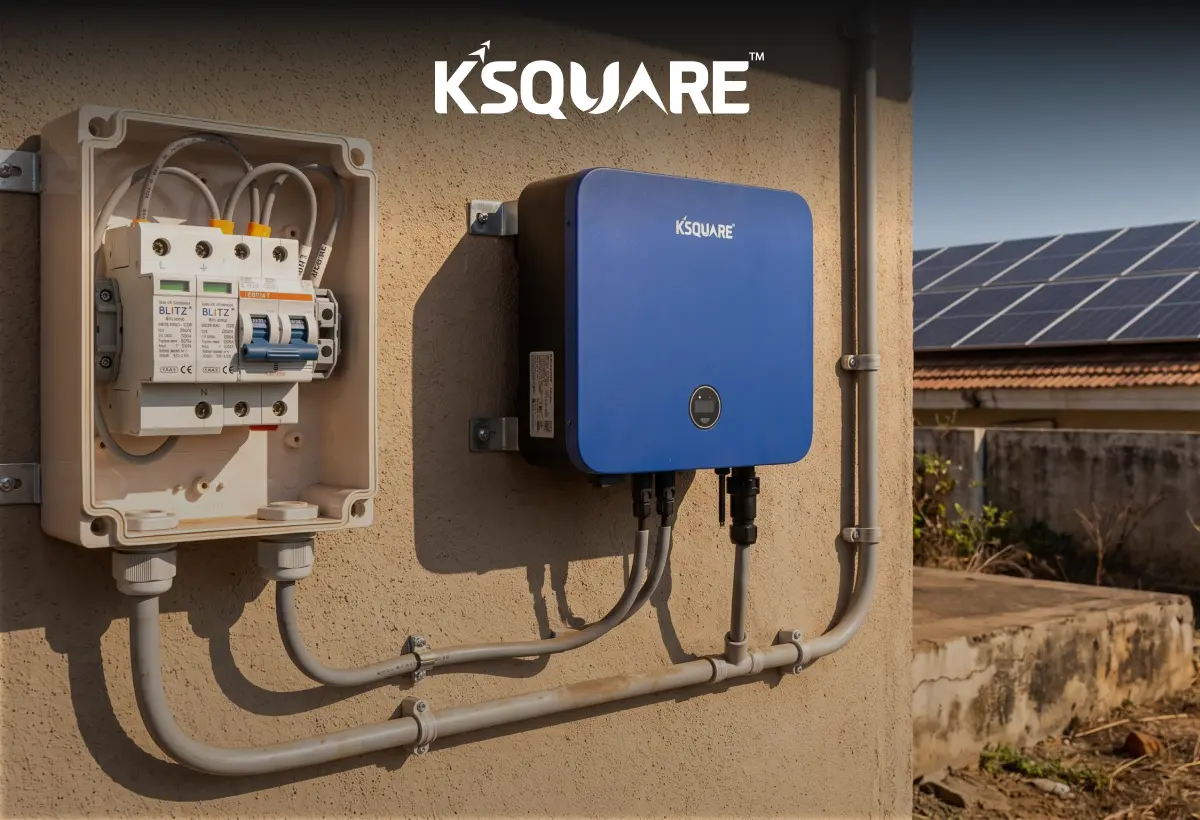
Introduction
Whenever more than one inverter needs installing at a site, it raises the question of how to connect all of them into one AC system safely and without a jumble of cables. The answer is an ac combiner box, which collects various AC output from several inverters/micro-inverters, produces one current line, and secures it through circuit breakers and surge protectors.
Funny thing is, most solar people know the DC side inside out. The strings, the string combiner, all of it. The AC side tends to get a shrug until an inspector asks a question or a breaker keeps tripping for no obvious reason. So let's fix that. Here's what the box does, what's inside it, how it differs from its DC cousin, how to size one, and how to fit and look after it.
What Is an AC Combiner Box and How Does It Work?
The process of an ac combiner box is very similar to the process of any other junction. It acts as a connecting point for multiple inverters connected through separate wires to the enclosure and provides one feed, which can be connected to the main gear or grid. Instead of using a separate cable from each inverter to the board, all the output feeds are combined into a single one.
The philosophy behind combining works quite simply. The output from every inverter goes through a breaker and into a busbar afterwards. The power then goes through surge protection and a switch before finally getting to the primary panel. This means fewer wires are needed, all the protection is concentrated, and the system can be turned off at once.
Why Is an AC Combiner Box Important for Solar Systems?
An AC combiner box earns its keep in three plain ways. It keeps the system safe, keeps it simple, and keeps it serviceable. None of these are small wins once you’ve got more than one inverter in play, and together they’re the whole reason the box exists. Here’s how each one plays out:
Keeps the System Safe
Safety comes from putting overcurrent and surge protection on the AC side in one reachable place. People forget that a surge rolling in off the grid can wreck an inverter just as fast as anything on the DC side.
Keeps It Simple
The simplicity is obvious the moment you see the wiring: fewer runs to the main board, less material, a cleaner job.
Keeps It Serviceable
This is the one that wins installers over in the long run. Need to shut down a single inverter to test it? You do it right here, at the box, instead of tracing cables around a site in the sun. On any multi-inverter system, that one point of control is the difference between a quick service call and a long one. Our solar combiner box maintenance checklist lays out the full routine if you want it.
What Are the Main Components of an AC Combiner Box?
Crack open a decent AC combiner box for solar and the same cast of parts stares back at you, each one earning its spot:
- ACDB for solar system, combining inverter outputs and providing AC-side protection and isolation.
- AC MCBs or MCCBs, one per inverter line, handling overcurrent and isolation for each feed coming in.
- AC surge protection device (SPD), usually Type 2, standing by to soak up spikes from the grid side.
- Main isolator, so one action shuts the whole combined output down.
- Busbar, properly rated copper, where th e separate circuits become one.
- Glands and terminals, sized right and sealed tight for clean entries.
- Metering and phase lamps (optional), the RYB indication you'll see on some configurations.
Not one of these parts will impress anyone at a dinner party. Doesn't matter. Their grade is the whole story behind whether the box runs cool for twenty years or quietly cooks itself inside two.Not one of these parts will impress anyone at a dinner party. Doesn't matter. Their grade is the whole story behind whether the box runs cool for twenty years or quietly cooks itself inside two.
AC Combiner Box vs DC Combiner Box: Key Differences
This trips people up constantly, so let’s be plain about it. Both boxes do the same basic job, many inputs in, one protected output out, but they sit on opposite sides of the inverter and run completely different parts inside. The DC combiner works before the inverter on the panel side, the AC combiner works after it on the grid side. Get them straight and the rest of the system makes a lot more sense.
| Feature | DC Combiner Box | AC Combiner Box |
|---|---|---|
| Position | Before the inverter | After the inverter |
| What it combines | Panel strings | Inverter outputs |
| Current type | High-voltage DC | Alternating current (AC) |
| Protection devices | DC fuses, DC SPDs, DC isolators | AC breakers, AC SPDs, AC isolators |
| Key hazard it handles | DC arcs that won’t self-extinguish | Grid-side surges and faults |
| Feeds into | The inverter | The main board or grid |
The guts differ because the current does. Same idea on both sides, many in and one out, with protection, but put the wrong one in the wrong place and you’ve built something genuinely dangerous.
What Are the Different Types of AC Combiner Boxes?
Mostly it comes down to what they’re feeding and where they’ll sit. There’s no single standard box, because a commercial rooftop with a few string inverters needs something quite different from a house wired with micro-inverters. Phase and enclosure play into it as well. Here are the main ways they split:
- String-Inverter Combiner Boxes: These combine the outputs of several ordinary string inverters, which is your typical commercial rooftop with a few inverters landing on one board.
- Micro-inverter Combiner Box: Appropriate in instances when we have a situation with every single solar panel equipped with its own mini inverters, thus enabling us to bring all those wires to one easily manageable point.
- Single phase and Three Phase: Single-phase options are ideal in smaller houses and light commercial while three-phase goes for larger commercial and industrial setups. Choose what is right for the project that you are working on.
- Indoor vs Outdoor Enclosures: The enclosure varies with where the box lives. Outdoor applications, for instance, need a housing that’s not only IP-rated but UV-resistant too.
What you end up choosing is dictated by the inverter type you’re using, the phase, and where the box is going to sit.
How to Choose the Right Size AC Combiner Box?
Sizing an ac combiner box solar unit is about matching it to the load and then giving yourself a bit of room. Take it in order.
Count the inverter outputs first, because that number decides how many input circuits you're shopping for. Next, add up the combined AC current of the lot, and spec the main isolator and busbar to carry it comfortably, never right at the ragged edge. Each breaker gets paired to its own inverter's rating. Check your phase, single or three, lines up with the system. Last comes the enclosure, IP65 or IP66 with UV resistance if it's living outdoors, and an SPD chosen for how badly the site gets hit by surges.
One more thing, and skip it at your peril: leave headroom. A spare circuit or two today costs pennies next to ripping the whole box out when the array grows next year.
What Safety and Protection Features Should an AC Combiner Box Have?
Protection is the entire reason this box exists, so this is no place to go cheap.
Every circuit should be protected on its own, with breakers rated to match, so one sick inverter line can't drag the rest down with it. There's your AC surge protection device, throwing grid-side spikes to earth before they ever reach an inverter. There's a main isolation point you can trust for a clean shutdown, planned or in a hurry. And it's all earthed properly, because an SPD without good earthing is a bit like a seatbelt you never clipped in.
The housing is also reliable here. The features of being IP-rated, flame-retardant, and UV-stable are responsible for not allowing dust, moisture, and heat to become tomorrow's issues. Labels are stuck on the device, and the next person using it knows exactly how to operate it safely.
Where Is an AC Combiner Box Used in Solar Installations?
Anywhere more than one inverter feeds a single system, basically.
Commercial rooftops running several string inverters use one to pull those outputs into a single neat feed. Micro-inverter systems lean on them to wrangle all those little AC outputs into order. Bigger homes with multiple inverters use them for the exact same reason, and industrial and utility plants depend on them to manage AC collection right across the site.
Where you won't need one is a small single-inverter home system, where the lone inverter just feeds the board on its own. The rule writes itself: more inverters, stronger case for an AC combiner box. For the wider picture on building systems that actually hold up, have a read of our guide to solar combiner boxes for efficient solar power systems.
AC Combiner Box Installation and Maintenance Best Practices
Installation is mostly about not cutting corners. Most of it is discipline rather than difficulty, the kind of small checks that are easy to skip when you’re moving fast and expensive to skip later. Wiring comes first, then where the box sits, then keeping an eye on it over the years. Here’s the order that keeps a box trouble-free:
- Kill the circuits first. Confirm everything’s dead before you touch it, and mind your phase sequencing on a three-phase box.
- Wire it in sequence. Each inverter output goes to its own breaker, onto the busbar, then the SPD and main isolator, and bond that enclosure earth properly.
- Torque to spec. Use a tool, not your wrist, because loose terminals cause more heat and scorch marks than anything else.
- Seal every gland. Keep moisture and dust outside where they belong.
- Mount it right. Keep it accessible, and if it’s outdoors, shade it from direct sun so the internals last longer.
- Check it regularly. Tight terminals, working breakers, a healthy SPD, and an airtight enclosure. Run that check more often on dusty, coastal, or very hot sites.
Why Choosing the Right AC Combiner Box for Your Solar System
You only realize that your combiner box has failed after you have suffered the consequences — such as downtime, an inverter short-circuit or even loss of a compliance inspection. When selecting a combiner box, one should focus on choosing the right equipment that has the right dimensions and is installed in accordance with IP standards. What are the main elements of a combiner box? There are manufacturers that do provide their customers with quality production, namely brands that use branded circuit breakers and SPD, make use of copper busbars and manufacture boxes that withstand Indian climates.
