
Introduction
As solar installations become larger and more technically advanced, every component on the DC side needs to be selected with care. Combiner boxes for solar systems help bring multiple PV strings together, organize DC connections, and support protection before power moves toward the inverter. Selection can also significantly impact system safety, maintainability, and reliability long-term. The specific design that is appropriate, however, depends on the number of strings, string voltage, current level, overcurrent, fault voltage, and overcurrent protection level, site environmental conditions, and inverter configuration. In 2026, developers and installers are paying increased importance to system monitoring and customization options as well as enclosure ratings and manufacturability of the combiner box. Knowledge of the important points will help you decide on a design for your particular project.
What Is a Solar Combiner Box?
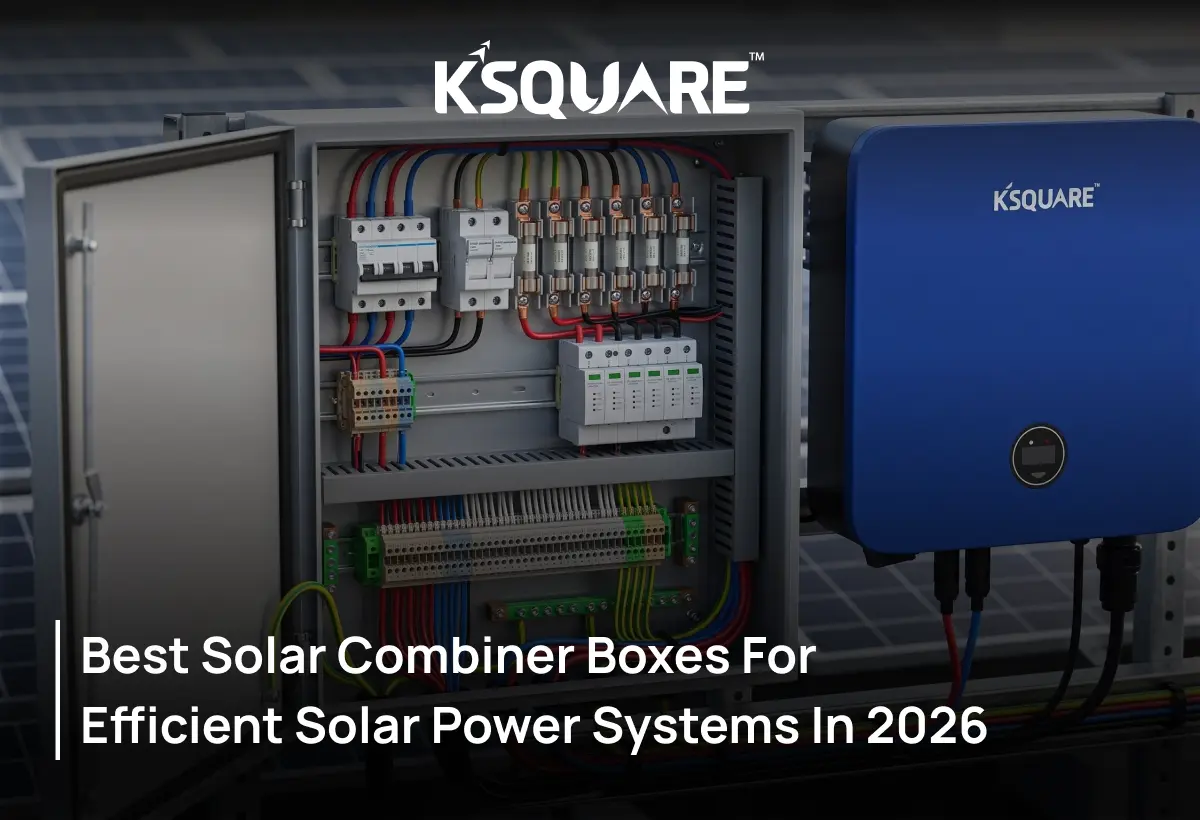
A DC combiner box is a weatherproof enclosure that connects several strings of solar arrays into a single DC circuit. The box is usually placed between the array and the inverter (or other D.C. Point of distribution), depending upon the setup of the system.
Normally, instead of taking all of the individual strings straight through to the inverter, individual strings could be run to one single enclosure to form a central connecting point to remove cable complexity for large solar plants.
A typical solar pv combiner box may contain string fuses, DC surge protection devices, isolation equipment, busbars, terminals, and monitoring components. The exact arrangement depends on the electrical design and project requirements.
A DCDB is used to receive, protect, and distribute DC power from solar PV strings before it reaches the inverter. Similarly, an ACDB is installed on the AC side to receive and distribute the inverter's AC output while providing protection and isolation. Depending on the system design, ACDBs and DCDBs may include circuit breakers, surge protection devices, isolators, and other electrical protection components.
While a combiner box primarily combines multiple solar strings, DCDB and ACDB provide additional distribution and protection functions within the overall solar electrical system. Proper component selection and sizing are therefore essential for safe and reliable operation.
Why Is a Combiner Box Important in a Solar PV System?
A correctly sized and installed combiner box can lead to enhanced levels of organization, security, and maintainability within a solar PV array. Its importance typically increases as the number of strings and size of the plant grows.
Simplifies String Connections: Multiple PV strings can produce a messy network of DC cables if each circuit is run back to the downstream equipment independently.
A combiner box brings these circuits together into a single organized area. This helps with the cable layout for easier identification and possible layout as it is installed.
Supports String-Level Protection: String fuses and other protective devices can help isolate individual strings during electrical fault conditions, preventing a problem in one string from affecting other parts of the PV array.
This helps contain electrical issues at the string level and supports safer, more reliable solar array operation.
Makes Maintenance More Practical: Protective devices allow faults to be isolated to specific sections of the solar array, making troubleshooting and maintenance more manageable. Technicians can identify affected strings more easily and address issues without unnecessarily disturbing the rest of the system.
This can reduce troubleshooting complexity and help maintenance teams work more efficiently.
Helps Manage Electrical Surges: Surge protection devices help protect sensitive electrical components from transient voltage events. They add another layer of protection against sudden electrical disturbances that may otherwise affect system components.
This added protection can support equipment reliability and reduce the risk of surge-related damage.
Protection devices must always be chosen to suit the actual electrical characteristics of the PV system.
Types of Solar Combiner Boxes Available
Solar projects have varying configurations. Selecting the right box depends on variables like the number of strings, electrical ratings, environmental factors, and monitoring requirements. Recognizing how these vary allows the combiner box to match the system and prevent safety and performance issues. An incorrect configuration may also increase the difficulty of installation and maintenance and subsequent system upgrades.
String Combiner Boxes
String combiner boxes are used to combine several incoming PV string inputs into fewer outgoing circuits. They are often found when more than one string must be joined prior to connection with an inverter or further DC equipment.
Monitoring Combiner Boxes
Monitoring configurations can include components that are capable of reporting on the performance of each string. This is an advantage in commercial, industrial, and utility-scale systems where manually identifying each string is impracticable.
Outdoor Combiner Boxes
A cabinet for outdoor use must be proof against dirt, sun, rain, humidity, and fluctuations in temperature. The individual parts of the internal system, material of the housing, ingress protection rating (IP-ratings) and UV-resistance must be coordinated with one another, just like cable entry glands.
Customised Combiner Boxes
Some projects require configurations that differ from standard models. String capacity, voltage rating, fuse arrangement, monitoring requirements, cable entry positions, and enclosure dimensions may all require adjustment.
Customization can be particularly useful when the combiner box must fit a specific array layout or electrical architecture.
Key Features of a High-Quality Solar Combiner Box
Instead of just looking at the number of inputs that a combiner box has, you will want to think of it as an entire electrical component. Its internal parts, enclosure, electrical rating, and protection mechanisms will factor into how well the box works over a period of years. You should examine all these issues at one time to ensure that your box is capable of handling installation pressures.
Appropriate Voltage and Current Ratings
The enclosure, including any interior items such as raceways and terminal blocks, must be designed to handle the highest voltage and current in the system. The enclosure ratings should be confirmed after verifying module design, string sizing, and inverter parameters.
Reliable DC Protection
Fuses, surge protection devices, isolators, and so on must be compatible with the DC system and properly coordinated with other components of the system. Use of correctly rated protective equipment leads to reduced likelihood of component damage and enhances the installation safety.
Durable Enclosure Construction
Outdoor enclosures must be suitable for their intended environment and be designed to stand up to harsh UV rays, high/low temperatures, moisture, dust, and heat.
An appropriate enclosure will therefore protect the environment and electrical components from everything found in its surrounding environment.
Quality Busbars and Terminals
The combined current is handled by busbars and terminals, so the correct design and size of these is vital. Safe connections help to prevent local overheating and excess resistance developing.
Clear Identification
Input/output terminals, protection devices, isolation points, and circuit paths should be uniquely labelled visibly. A better labelling system may reduce testing and commissioning time, saving important seconds or even minutes.
Applications of Solar Combiner Boxes for Different Solar Systems
The purpose of a combiner box varies depending on the scale and complexity of a solar array. Unlike small systems that only require a simple setup, a larger installation has a need for increased string capacity, protection, and monitoring. The type of application will determine what mix of electrical ratings, enclosure features, and protection devices is needed. For reliable solar installations, businesses can also work with certified ACDB and DCDB manufacturers in India to ensure proper protection and power distribution.
Residential Solar Systems
In the case of small residential systems, separate combiner boxes may not always be needed; where the inverter has sufficient MPPT inputs for the array arrangement, the strings may be able to be wired directly to the inverter.
Where strings increase, or further protection needs are required, the dedicated enclosure keeps the connections neat and orderly.
Commercial Rooftop Solar Systems
Rooftop systems commonly have many more strings and more electrical output than those on residential homes. The components can be combined and protected using a single combiner box in a central location. Considerations can include not only the string wiring and electrical layout but also the rooftop conditions, such as weather patterns and temperature exposure.
Utility-Scale Solar Plants
Large solar plants can contain a substantial number of PV strings spread across different array sections. Combining strings into organized circuits can help simplify cable routing and DC-side management.
Monitoring can also become increasingly useful as the size of the plant increases.
Industrial Solar Projects
A solar combiner box for industrial solar plants should be selected with particular attention to string count, system voltage, current capacity, environmental exposure, protection coordination, and accessibility.
Industrial facilities can have demanding operating schedules, making reliable equipment and easy maintenance important considerations. Advanced solar panels for industrial applications also require properly selected electrical protection and power management components. Therefore, a solar combiner box for industrial solar plants should be considered part of the wider electrical system rather than as an isolated component.
How to Choose the Right Solar Combiner Box for Different Solar Projects?
Start with the project's electrical design, not a catalogue model. When comparing boxes, use the string config, voltage and current, what sort of inverter it's connected to, and the environment it's being fitted in. This makes for a better comparison and reduces the risk of having the wrong equipment for the safety, reliability, and maintainability you require.
Determine the Number of Strings: First, you should find the total number of PV strings. The enclosure which you select should be able to accept all the PV strings under consideration, such that all the wiring within the box is manageable.
Verify the System Voltage: Check the maximum system DC voltage and verify that the box and all appropriate components inside are also rated for such. Selection will need to reflect the real PV string configuration and operating max values.
Calculate Current Requirements: Current rating of the incoming fuse should be accounted for when selecting bus bars, terminals, isolating devices, and output terminals. Overall output must not exceed the rating of the chosen component and must not cause any blockage within the DC circuit.
Consider the Installation Environment: The installation location will affect the specification of the enclosure considerably. Ambient temperature. Dust, moisture, rain, humidity, Uv, exposure, access, fitting arrangement, and how you are installing and arranging the cable and maintenance will affect the enclosure spec for your solar installation.
Check Inverter Compatibility: The combiner box has to be appropriate to the inverter & to the system design. Consideration has to be given to MPPT configuration and required DC input and cable routing, as well as following protection.
Solar Combiner Box Safety Standards and Protection Requirements
Safety measures will need to be incorporated when designing the equipment and ordering, installing, and commissioning. The box should be fitted with the correct DC-rated components. Consideration must be given to DC protection, as DC faults do not act in the same way as AC faults.
Surge protection must also be applied, as this will need to be matched to the installation type and coordinated with the earthing/lightning protection.The box needs to incorporate the correct IP rating. The same level of IP rating will also need to be maintained for glands, doors, etc.
Project teams should also consider manufacturing quality when comparing combiner box manufacturers. Datasheets are useful, but buyers should also look at component quality, testing practices, assembly consistency, customization capability, documentation, and technical support.
Choosing among established combiner box manufacturers can be particularly important for large projects where equipment reliability and service support can affect long-term operating costs.
Solar Combiner Box Installation and Maintenance Best Practices
The manner in which your electrical devices are installed determines much about how they will perform over the life of the equipment. Even with a properly designed combiner box, a wide range of avoidable problems can result if proper wire connections, cable management, compartment sealing, or circuit protection are not implemented.
- Check Connections Before Energisation: Prior to switching on, check polarity, string connection, terminals, fuses, SPDs, isolator, earths, and cable entry (this must be checked prior to Energisation).
- Maintain Proper Cable Routing: The way in which cables are routed and secured should ensure that unwanted mechanical stress is not transferred onto cable entries and the cable gland itself.
- Protect the Enclosure: Doors, covers, glands, and other sealing areas should be closed again when installation or servicing is completed. An enclosure cannot hold environmental protection when it is closed incorrectly.
- Inspect Internal Components: Checks that must be part of regular maintenance include loose terminals; signs of mechanical damage, discoloration, or overheating; ingress of moisture; and abnormal functioning of protections.
- Review String Performance: Where monitoring is available, we can track string performance and pick out any that show a difference from others. This could suggest an abnormality and needs investigation: a faulty connector, shading on a panel, a fault on an array, a poor fuse, etc.
For installers looking for a practical reference, this guide on how does a solar combiner box works explains the operating process and major components in greater detail.
Future Trends in PV Combiner Box Technology
With the rise of larger, digitally operated solar plants, the combiner box is also being innovated. Smarter monitoring, enhanced protection, and smoother integration into the plant controller are the core of current innovations. Such innovations can support owners with faster troubleshooting, better-informed decisions regarding maintenance, and more reliable long-term energy generation.
Advanced String Monitoring
String-level monitoring helps operators understand which circuits are underperforming and rapidly track down faults, thereby aiding proactive maintenance and lessening diagnostics time in large array installations.
Greater Project Customisation
Configurable Combiner Boxes Expand the Landscape. Solar projects are diversifying their layout designs, module interconnections, system voltages, and environmental variables. These varying conditions necessitate configurable and project-specific DC combiner solutions.
Digital Plant Integration
Increasingly, monitoring of the DC side can also be integrated into overall plant monitoring. This offers the operators insight into individual string behavior, as well as system performance.
Greater Focus on Reliability
With solar hardware used for decades and located in various harsh outdoor conditions, manufacturers will want to look beyond raw specs to enclosure resilience, quality of materials, production consistency, and ease of maintenance.
Installers who want to review practical considerations before specifying equipment can also refer to this solar combiner box guide for installers.
Why Choose Ksquare Energy Solar Combiner Box Solutions?
Ksquare Energy, from Ahmedabad, is involved with manufacturing and supplying of solar products along with electrical distribution products. Products provided by the company include ACDBs, DCDBs, AJBs, SCBs, combiner boxes, solar structures and other solar distribution solutions. The company also has 8+ years experience in this sector and has made its footprint across India, through emphasis on product quality and punctuality in delivery.
Ksquare has experience across residential, commercial, industrial, and utility scale solar projects, making it a reliable manufacturer of solar products in Ahmedabad for a wide range of solar applications.
Although looking only for the combiner box selection, having related equipment of the same manufacturer specializing in the solar area helps to better correlate between DC and AC electrical systems. With a broad product assortment, Ksquare can also assist with the solar electrical product selection in line with the solar project application and system set-up.
The company has the capability of manufacturing the products along with the broad offering of solar electrical equipment, making it a relevant choice for anyone evaluating equipment procurement options. For the project execution team, it’s always recommended to provide required inputs to the manufacturer like no.
Of strings, system voltage, current handling, inverter connections, installation location environment, protection needs, and communication protocol.
This helps the final solution to meet actual site conditions rather than the standardized specification.
